

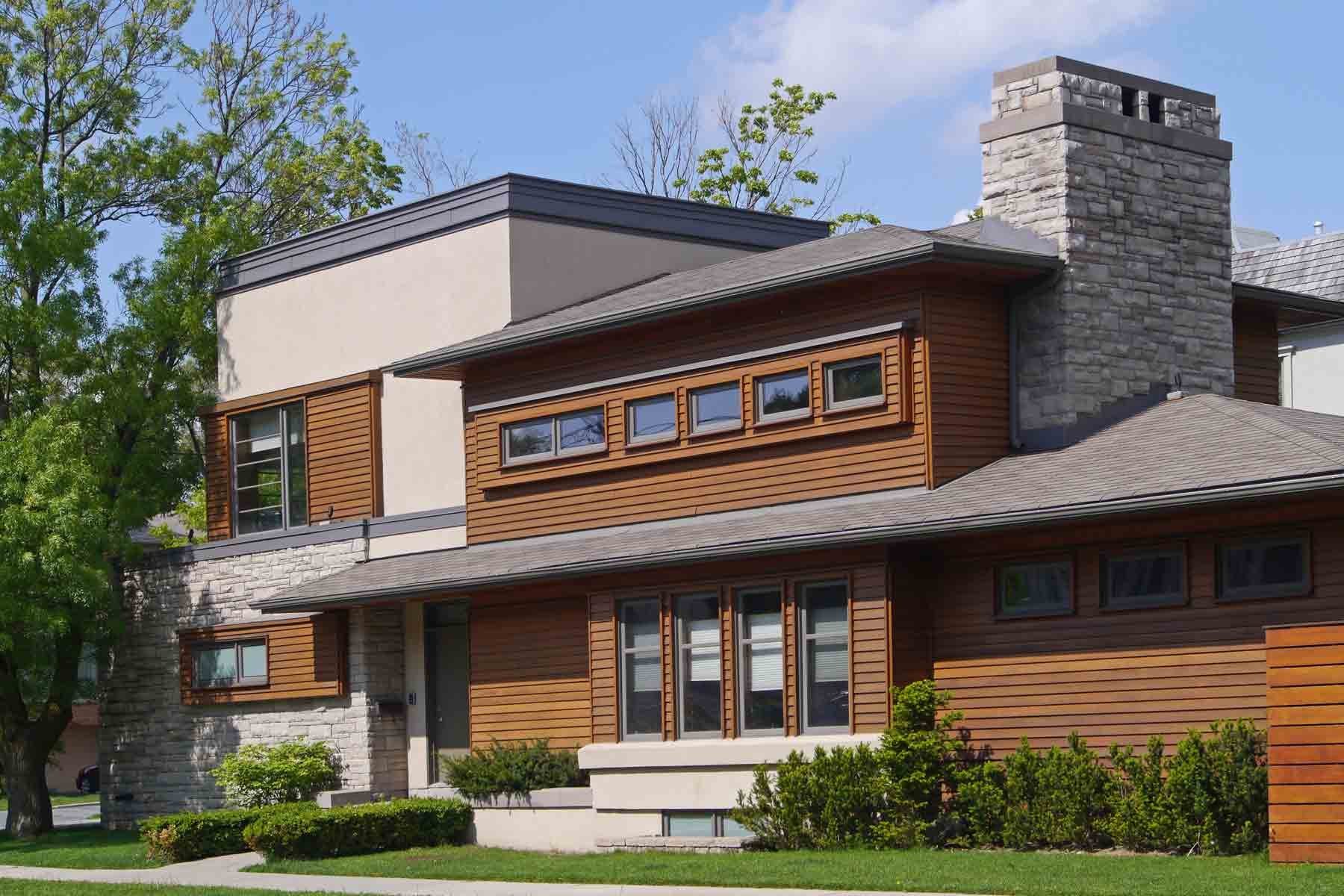
Vinyl and fiber cement are the two most common siding materials in America, and together they cover well over half of all homes. If you're re-siding a house in Knox County, these are almost certainly the two products you'll weigh against each other. We install both and hold the manufacturer certification for each, so we're not steering you toward whichever one pads our margin. The real answer to "which is better" isn't a slogan. It depends on your budget, how long you plan to stay, and what your home and your neighborhood call for.
What follows is the straight version: cost, lifespan, upkeep, how each one handles East Tennessee weather, and what they do for resale. Read it before anyone comes out to measure and you'll ask better questions.
The materials in plain English
Vinyl siding is made from PVC, a rigid plastic. It comes pre-colored from the factory, snaps together panel to panel, and weighs almost nothing, around half a pound per square foot. You never paint it, it won't rot, and insects won't touch it. It's the most affordable mainstream siding and the fastest to install. Where it struggles is heat and impact. Hard cold can make it brittle, intense sun or glare off a window can warp the cheaper grades, and the color softens after a few decades of UV exposure.
Fiber cement is a heavier, more durable product. James Hardie dominates the category so completely that most people just say "Hardie board." It's a mix of Portland cement, sand, and cellulose fibers pressed into rigid planks. At roughly 2.5 pounds per square foot, it weighs about five times what vinyl does. It's non-combustible, it won't rot, and it won't feed termites. Up close it reads more like real wood, and it holds paint for a long time. The tradeoffs are price and labor, since it takes special blades to cut, produces silica dust that crews have to mask up for, and takes longer to hang.
We install both to manufacturer spec. We're a James Hardie Alliance Preferred Contractor and we're VSI Certified through the Vinyl Siding Institute, and we're authorized for the major vinyl lines including CertainTeed, Mastic, and Royal. You can see the full certification list here. Neither product is the automatic right answer for every house, which is the whole reason to compare them honestly.
Vinyl vs. fiber cement siding cost in Knoxville
Cost is usually the first question, and it's where the two materials separate most clearly. Vinyl is almost always cheaper once it's on the wall, and fiber cement carries a real premium that comes as much from labor as from the boards.
Across the market in 2026, installed vinyl tends to run around $4 to $8 per square foot, while fiber cement usually lands closer to $10 to $16 per square foot installed. On a typical Knoxville home, a full re-side falls between $12,000 and $45,000 once you factor in the material, the size and shape of the house, and how much trim work is involved. Vinyl projects cluster toward the lower end of that range and fiber cement toward the higher.
Two things drive the spread. The first is weight and handling, because a product that weighs five times as much needs special cutting, dust control, and more hours from the crew. The second is the part most online cost calculators leave out. The biggest variable in any siding quote isn't the board you pick, it's the scope of work behind it: tear-off of the old siding, whatever gets found underneath once it's off, the house wrap, the flashing, and the trim detail. When one bid comes in well under another, the cheaper one is usually missing scope rather than offering a better deal.
Lifespan and upkeep
This is where fiber cement starts to justify the extra money. Good vinyl lasts somewhere around 20 to 40 years in our climate, while fiber cement runs 30 to 50. You get roughly double the service life out of fiber cement, so if you intend to stay in the house for the next 20 years or more, there's a real chance you'd replace vinyl once during that stretch and never touch fiber cement at all.
Upkeep runs the other direction. Vinyl is about as close to maintenance-free as siding gets, since washing it down once a year is the extent of it and it never wants paint. Fiber cement asks for a little more. The factory finish is genuinely good, but most homeowners repaint fiber cement somewhere around the 12-to-15-year mark depending on the color and how much sun the wall takes. Neither is a real burden, though if your priority is never thinking about your siding again, vinyl has the edge.
How each handles Knoxville's climate
East Tennessee puts a specific set of stresses on siding: hot, humid summers, winters that get cold without going arctic, freeze-thaw swings, hard sun, and a spring storm season that brings wind and the occasional round of hail. Each material answers those conditions differently.
Heat and sun
Summer is the one place vinyl needs respect. On a south or west wall, or anywhere it catches reflected glare off a low-E window, cheaper vinyl can warp, and over many years the color fades under our UV. Thicker premium vinyl with modern color-retention holds up far better than builder-grade, so the grade you choose matters here. Fiber cement doesn't warp in heat and keeps its baked-on color longer, which is a real advantage on those hard-sun elevations.
Moisture and humidity
Both materials shrug off moisture when they're installed correctly, and neither one rots. The thing that actually protects your house from water isn't the siding at all, it's what sits behind it: the house wrap, the flashing around every window and penetration, and a wall that someone actually inspected before closing it back up. That's an installation question rather than a material question, which is exactly why we tear the old siding off instead of burying problems under new boards.
Hail and impact
This one genuinely cuts both ways. Vinyl can crack or get punched through by a hard hail strike, and the repair means swapping panels. Fiber cement is denser and takes a hit better, though a bad enough strike can still chip or crack a plank, which means replacing the plank and matching paint to the rest of the wall. On balance, fiber cement wins on impact and high wind. There's an insurance angle worth mentioning too, since fiber cement's non-combustible, impact-resistant build leads some homeowners to see it reflected in their premiums, so it's worth a call to your agent.
Fire
Fiber cement doesn't burn and carries a Class A fire rating, while vinyl melts and burns. For most Knoxville homes this barely registers, but if your house sits close to a neighbor, or you have an outdoor kitchen or a wood-burning setup, it nudges the decision toward fiber cement.
Curb appeal and resale
Stand six feet from a wall and fiber cement reads as the more premium, more authentic wood-look surface, and that perception follows the house to closing. The industry's most-watched benchmark, the 2025 Cost vs. Value Report, put fiber cement siding replacement at roughly 114% of cost recouped at resale nationally, one of the best returns of any remodeling project anywhere. Vinyl replacement came in around 97%. Both numbers beat what most interior projects return, so new siding of either kind is money well spent. Fiber cement just edges it on perceived quality.
The neighborhood angle matters more than the national average. On a street that's mostly vinyl, vinyl is the right call, and spending up on fiber cement may never pay you back. On a street full of brick, cedar, and fiber cement, hanging vinyl on your house can cost you at sale. Match the material to your block rather than to a chart you found online. If you're not sure where your home lands, that's the kind of thing we'll tell you straight when we walk the exterior, and our siding installation in Knoxville covers every material we install.
So which should you pick?
Here's the framework we use standing in someone's driveway. Vinyl is the move when budget leads the decision, when you want the least possible upkeep, when you're siding a rental or a house you might sell inside ten years, or when your neighborhood is mostly vinyl already. In that case, premium insulated vinyl is worth a look, since the foam backing adds a bit of R-value and stiffness for a few dollars more per square foot.
Fiber cement earns its keep when you're staying put for the long haul, when you want the most convincing wood look and the strongest curb appeal, when your street runs higher-end, or when fire and impact resistance weigh on you. You pay more at the start, but you probably never re-side the house again, and the resale math is the best in the category.
For plenty of Knoxville homeowners the whole decision comes down to one question: how long are you staying? Under ten years, vinyl usually wins on the numbers. Long haul, fiber cement usually does. Windows and doors often come up in the same conversation, since people tackling siding are frequently thinking about the whole exterior, and we handle replacement windows and entry and patio doors on the same projects.
The part that matters more than the material
Both manufacturers will tell you the same thing: the best siding on earth fails when it's installed wrong, and the warranty goes with it. That's why we tear off the old siding so we can inspect the wall sheathing, replace rotten OSB, install proper house wrap, and deal with any flashing problems before the new siding goes up. It costs more and takes longer than siding over what's already there, but it's the only way to do it right, and it's what keeps your manufacturer warranty intact.
Whichever material you're leaning toward, ask any contractor the same handful of questions. Are you certified for this specific product? Do you tear off and inspect, or side over the old material? Who handles the flashing around windows and rooflines, since that's where most siding failures actually begin? And how long does the written quote stay good? An honest one should hold for 60 to 90 days, with none of the "sign tonight" discount pressure.
Want a real quote on your own home?
We've sided thousands of homes across Knox County since 1996, we install both vinyl and fiber cement to manufacturer spec, and we back the work with a lifetime workmanship warranty. We'll come out, walk the exterior with you, talk through the options against your home's style, your street, and your budget, and leave you with a written quote good for 90 days. If you're torn between the two materials, we'll price both so you can compare them side by side instead of guessing.
If you'd rather work through some rough numbers first, our siding cost estimator will get you into the right ballpark before anyone comes out.
Want vinyl and fiber cement priced side by side?
We'll come out, measure, and put together a written proposal for either material. No high-pressure sales, no manager specials. Quote is good for 90 days.